
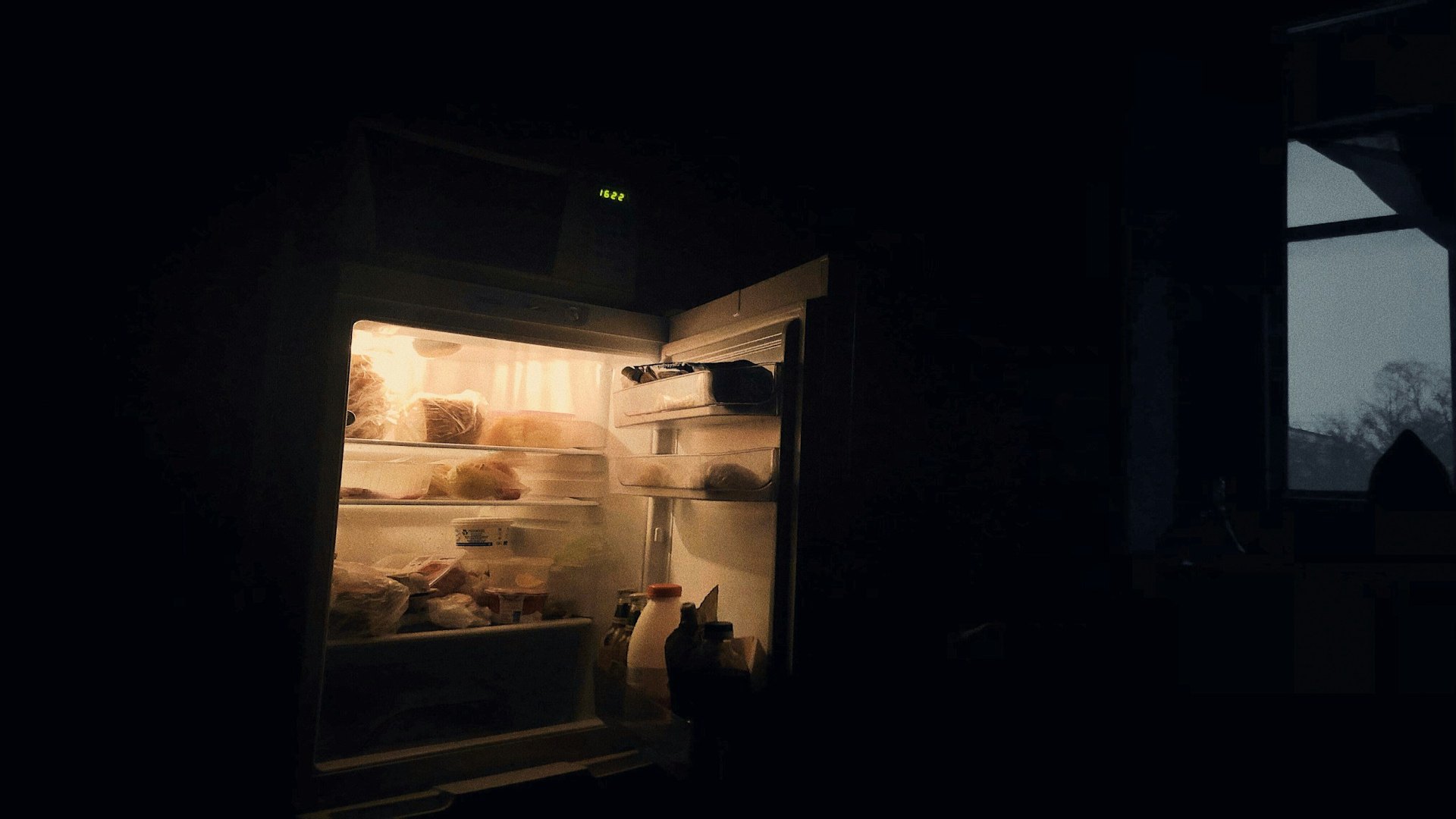
A sudden power outage changes your plans quickly. You hear the hum of your electronics die, and your first thought isn’t about the lights or the internet. It is about the food sitting in your refrigerator. Spoiled meat, melted ice cream, and ruined leftovers lead to a messy cleanup and a hit to your wallet. If you want to avoid that stress, the best portable power generators for your refrigerator can provide a reliable safety net. Finding the right machine keeps your food safe even when the grid goes down.
Choosing the right generator does not have to be a headache. You do not need to be an electrician to understand what keeps a fridge running. It comes down to basic math and knowing a few key features. We will walk through how to pick a generator that handles your specific needs without costing you a fortune.
Refrigerator Power Needs
Most people think their fridge only needs a little bit of power. While they do not draw as much energy as a space heater or a dryer, they have specific needs. If you buy a unit that is too small, your fridge will not start. If you buy one that is too big, you are just wasting money on fuel and size.
Starting vs. Running Power
You will see two numbers on your appliance label: running watts and starting watts. Running watts are the power your fridge needs to keep the compressor spinning and the interior cold. This is the baseline power draw.
Starting watts are different. When the fridge motor kicks on, it needs a jolt of extra energy for a few seconds. This is the “surge.” If your generator cannot handle that surge, the fridge will simply fail to turn on.
Always check for both numbers before you buy a generator. A standard kitchen fridge usually runs around 600 to 800 watts, but the starting surge can jump that to 1,500 or 2,000 watts.
How to Find Your Refrigerator’s Wattage
You do not need to guess these numbers. Your refrigerator has the data written on it. Look for a sticker or a metal plate on the back of the unit or inside the door. It will list the “amps” or “watts.”
If you see amps, you can do quick math. Multiply the amps by 120 (the standard household voltage). The result is your running wattage.
If you cannot find the tag, look up your specific model number on the manufacturer’s website. They provide digital owner’s manuals that contain exact power specifications. Using the real numbers is always safer than guessing.
Key Generator Features for Refrigerator Power
Once you know your wattage requirements, you can look for the right hardware. Not all generators are built for the same tasks, and some are better suited for home appliances.
Inverter Generators: The Quiet & Efficient Choice
If you want to power a fridge, look for an inverter generator. These models differ from the loud, heavy construction-site generators you might be used to.
Inverter generators produce “clean” power. This is vital because modern refrigerators have delicate circuit boards and sensors. Clean power has low Total Harmonic Distortion (THD), which means it won’t fry the sensitive electronics in your appliance. They are also much quieter and use less fuel because the engine adjusts speed based on how much power the refrigerator needs at that moment.
Generator Wattage Capacity
To size your generator, take the starting wattage of your fridge and add a buffer. Never plan to run a portable generator at 100% capacity. It shortens the lifespan of the engine and leads to more frequent oil changes.
Aim for about 20% to 25% overhead. If your fridge has a surge of 1,800 watts, a portable inverter generator capable of 2000 watts is about the minimum you should consider buying. This ensures the generator runs smoothly without stalling during the compressor startup cycle. It also gives you a little extra room to plug in a light or charge a phone.
Fuel Types and Runtime Considerations
Most portable generators run on gasoline. It is easy to find, but it goes bad if it sits in the tank for more than a few months.
Propane is a great alternative. It stores for years without spoiling and burns cleaner. Some generators are “dual-fuel,” meaning you can switch between gasoline and propane. These offer the best flexibility during long outages where gas stations might be closed or empty.
Always check the fuel tank size versus the power draw to estimate how many hours you get on one fill-up.
Top Portable Power Generators for Refrigerators
There are many great options on the market. These models cover different needs, from tight budgets to maximum reliability. Keep in mind that prices change frequently based on demand and supply chain availability.
Best Overall: Honda EU2200i
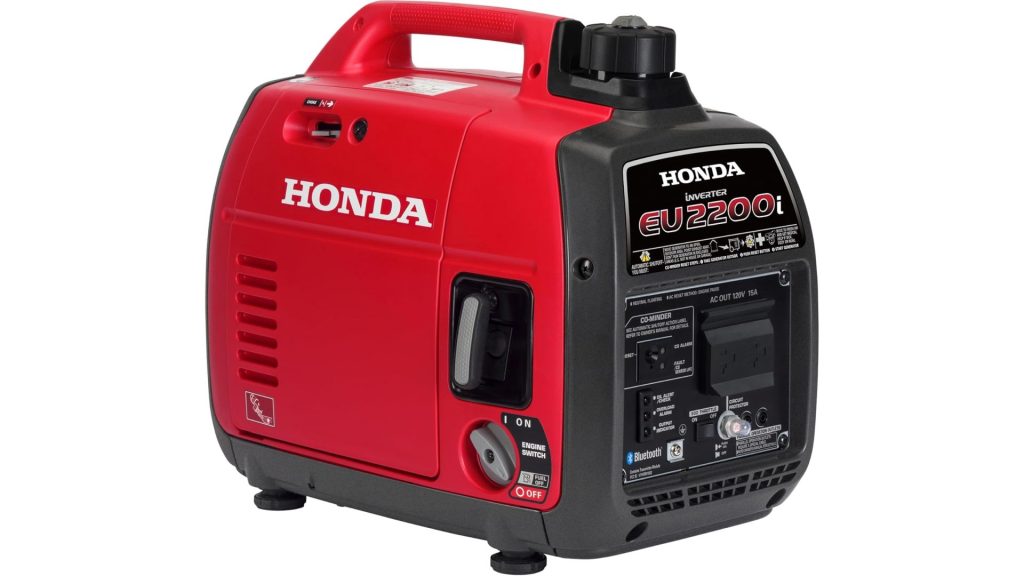
The Honda EU2200i is the gold standard for portable power. The EU2200i offers 2,200 starting watts and 1,800 running watts. It is whisper-quiet, making it perfect for residential neighborhoods. It is an inverter generator, so it provides excellent power for sensitive electronics. Furthermore, it is light enough to carry, and it runs for hours on a small tank of gas.
While the Honda EU2200i carries a higher price tag, the reliability and resale value make it a smart investment for most homeowners. Click here to check price on Amazon (paid link).
Best Budget-Friendly: Champion 2000-Watt Models
If you want the benefits of an inverter without the premium price, a Champion model is a top choice. These models usually offer around 2,000 starting watts and 1,800 running watts. The standout feature is usually the dual-fuel capability. You can run it on standard gasoline or propane tanks. This is a massive help during long outages when you might run out of gas but still have a grill propane tank in the backyard.
Generally, Champion inverter generators are slightly louder than the Honda but works perfectly for keeping food cold. Click here to read more about 2000W dual fuel portable inverter generators.
Best High-Capacity: Westinghouse WGen9500DF

Do you have a massive side-by-side fridge, a chest freezer, and maybe an extra fridge in the garage? You need more power.
The Westinghouse WGen9500DF is a workhorse. It provides a 12,500 starting watts and 9,500 running watts on gasoline. When using propane as the fuel source, it provides 11200 peak starting watts and 8500 running watts. You won’t just run your fridge; you can run an air conditioner or a well pump at the same time.
It is much heavier and louder than the small inverter generators, but it offers more power during extreme weather events. Click here to view the Westinghouse WGen9500DF on Amazon (paid link).
For those of you who want a model that can also run on natural gas, the Westinghouse WGen9500TFc model can run on gasoline, propane, or natural gas. When using natural gas as the fuel source, it produces 9,500 peak watts and 7,500 running watts. Read more about the WGen9500TFc tri-fuel portable generator here.
Essential Accessories and Safety Precautions
A generator is a powerful tool, but it requires respect. Using it correctly keeps your food safe and your family protected from hazards.
Extension Cords and Connection Best Practices
Do not just grab the thinnest cord in the garage. Appliances pull a lot of power, and thin cords can overheat, melt, or cause a fire. Buy a heavy-duty, outdoor-rated extension cord with a 12-gauge thickness. The shorter the cord, the better. A 25-foot cord is safer and more efficient than a 100-foot cord.
Make sure the plugs fit snugly into the generator. A loose connection causes arcing, which creates heat and can damage your fridge’s electronics.
Ventilation and Carbon Monoxide (CO) Risks
This is the most important rule of owning a generator: never run it indoors, in a garage, or near windows. Generators produce carbon monoxide (CO), an odorless and deadly gas. Even in a shed or an open garage, the gas can creep into your home. Place your generator at least 20 feet away from your house, facing the exhaust away from any doors or vents.
Maintenance and Storage Tips
Treat your generator like a car. It needs regular oil changes to stay in good shape. If you plan to store it, add a fuel stabilizer to the gas tank to prevent the fuel from turning into gum. Better yet, run the generator until it is completely dry of gas before putting it away for the season.
Store the portable generator in a dry, covered area to prevent rust. Start it up once every few months to make sure the battery is charged and the engine fires up on the first pull.
Emergency Preparedness
Major agencies like FEMA and the Red Cross emphasize having a backup plan. They note that food safety is one of the biggest challenges after a storm. Your fridge keeps food safe at 40 degrees Fahrenheit or below. Once the power stays off, food begins to spoil quickly.
Experts suggest that a small, portable power source is one of the easiest ways to maintain health and safety during a disaster. You do not need to power the whole house to win the battle; you just need to keep the essentials running.
Peace of Mind with the Right Generator
You now have some basic knowledge to pick the right power source for your home. Remember to calculate your specific wattage needs, look for inverter technology for safety, and prioritize safe operation.
A power generator is more than just a piece of equipment; it is insurance for your kitchen. By taking the time to prepare now, you avoid the waste and the stress of a power outage later. Your fridge will keep humming, your milk will stay fresh, and you will have one less thing to worry about when the storm clouds roll in.
Photo by Maxim Shklyaev on Unsplash.