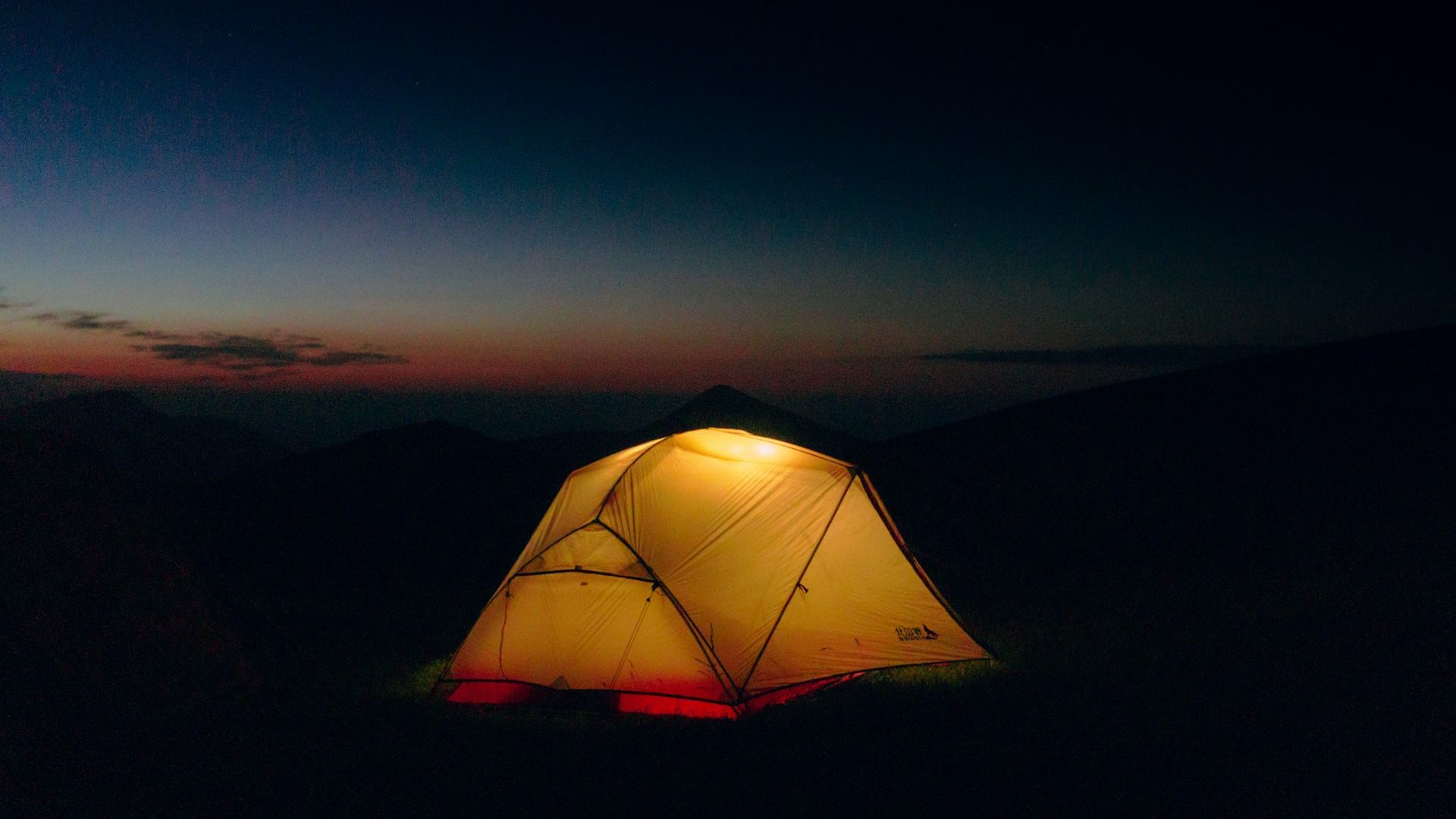
You’re deep in the woods, stars overhead, but your phone’s dying and the cooler needs electricity to keep food fresh. That moment hits hard when nature calls, yet you crave a fan for hot nights or lights for evening chats. Modern camping blends adventure with small comforts, and without steady power, it falls flat.
Portable generators fix that problem. They deliver reliable energy off the grid for everything from charging devices to running small appliances. This guide sorts through options to find the best portable power generators for camping. We’ll cover types, key choices, top picks, and tips to keep things safe.
Portable Generator Types for Outdoor Use
Portable generators come in several styles, each suited to different camping needs. Knowing the basics helps you pick one that matches your setup. Let’s break down the main categories.
Inverter Generators vs. Conventional Generators
Inverter generators produce smooth, clean power that protects sensitive gear like laptops or medical devices from damage. Conventional generators, on the other hand, send out raw, choppy power that can surge and cause issues. Although, in newer models the THD (total harmonic distortion) have been reduced when compared to those old conventional generator models.
For camping, inverter generators win out most times. They run quieter and use less fuel. Always go for an inverter model if your camping kit includes electronics.
Gas, Propane, Dual-Fuel, and Solar
Gas-powered generators are common and easy to find. They pack power but can be loud and require fresh fuel to avoid gumming up.
Propane allows you to store fuel for much longer without going bad, making them great for long hauls where you can’t refill often. Dual-fuel models switch between gas and propane for flexibility on remote sites.
Portable power stations for camping pair solar panels with batteries for renewable energy, though they depend on the sun shining for many hours each day.
If you want a quiet gas-powered generator for camping, then look at inverter type models that keep noise down. For the best propane generator picks, check for models with dual-fuel capability, so it is easy to connect and switch to propane.
Portable Power Stations vs. Fuel-Based Generators
Battery power stations use rechargeable lithium battery packs to store and produce power when you need it. They make no noise and emit zero fumes, perfect for quiet camping sites or eco-focused trips. Runtime tops out at hours, not days, unless you add solar panels for recharging the battery pack.
Fuel-based units last longer with refills but need good ventilation, and they make a constant noise. Fuel generators handle heavier loads, such as fridges or tools. In contrast, portable power stations are great for light use, like phones, cameras, and lights.
Key Factors for Selecting Your Camping Generator
Choosing a portable generator means weighing specifications against your camping routine. Think about how you’ll use it and where. These factors should guide your buying decision.
Calculating Your Power Needs
Running watts keep devices going steady, like a 1,000-watt coffee maker. Starting watts handle the initial kick, often double for motors. Add up your must-haves: phone charger (50 watts), fan (100 watts), and camping fridge (50 watts running, 100 starting).
Total running watts give your base need; add 20% for starting surges. For a small camping site, between 1,000 and 2,000 watts should work. Larger groups might need 3,000 or more. Here is a simple list to serve as an example:
- Phone charger: 50 watts
- Lights: 100 watts
- Cooler/fridge: 100 watts
- CPAP machine: 600 watts
- Microwave: 1,000 watts (short bursts)
- Total power needs: 1,850 watts.
Portability and Weight
Light units under 20 pounds suit backpackers who hike in. They often cap at 1,000 watts but pack easy. Car campers can haul 50 to 100 pound models with more punch and wheels.
Look for built-in handles or foldable bars. Wheels make towing simple across gravel. Match weight to your transport methods: keep it under 30 pounds for solo treks.
Noise Levels for Campsite Harmony
Quiet generators measure below 60 decibels from 25 feet. Louder ones hit 70 or more, like a vacuum cleaner, which bugs neighbors. Inverter technology generators with an enclosed design usually muffles the engine noise for increased peace and quiet.
Many national parks, like those in Yellowstone, ban loud generators after hours. Check the rules before packing. Low noise keeps your camping spot safe and sound.
Top-Rated Portable Generators for Camping Scenarios
Now we get to picks that stand out. These models balance power, ease, and cost based on user reviews and specifications.
Best Overall Camping Inverter Generator
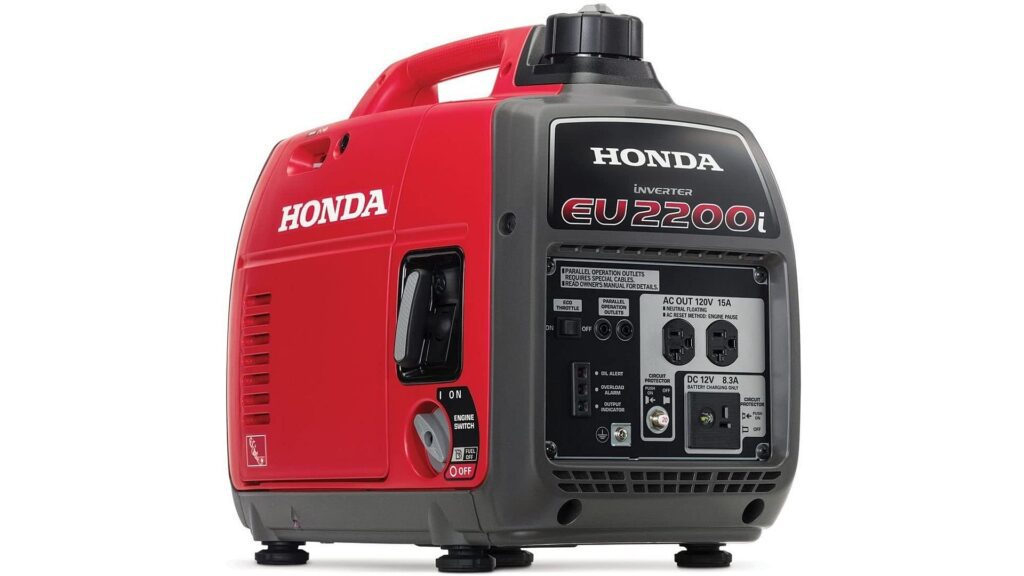
The Honda EU2200i is a light, portable generator that weighs just over 47 pounds. It’s quiet enough for camping since it runs at about the volume of a normal conversation.
You can power microwaves, fridges, or computers with its clean inverter technology. There is even an app that lets you monitor power and get service alerts via Bluetooth.
Its small fuel tank can last up to 8 hours. An Eco Throttle system keeps fuel consumption low. It’s a solid choice for RVs and camping trips, even though it is on the expensive side (check price on Amazon – paid link).
Best Budget-Friendly Camping Generator
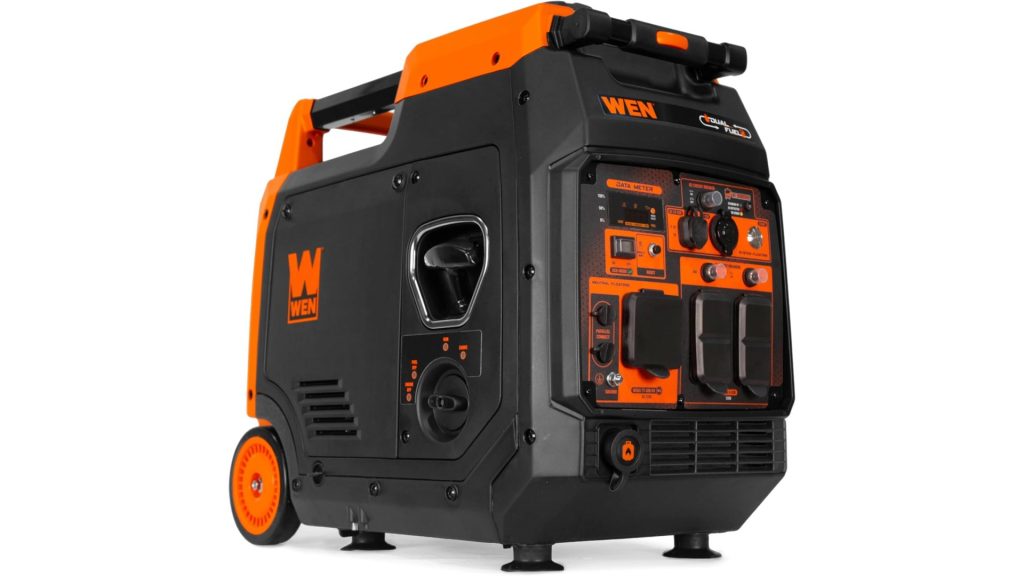
The WEN DF480iX is a handy portable generator. It runs on gas or propane, giving you a great choice of fuels. With 4000 running watts on gas, it powers most camping appliances and gadgets. It uses inverter technology for steady power, so your phone and laptop stay safe.
You can start it with the electric starter or a pull cord. Its wheels and handle make it easy to move around. A built-in CO sensor keeps you safe from carbon monoxide fumes.
Many users love how quiet it is during camping trips. The battery needs some care, but it starts up well. It is a solid pick for power outages or outdoor fun. Click here to check price on Amazon (paid link).
Best Portable Power Station for Camping
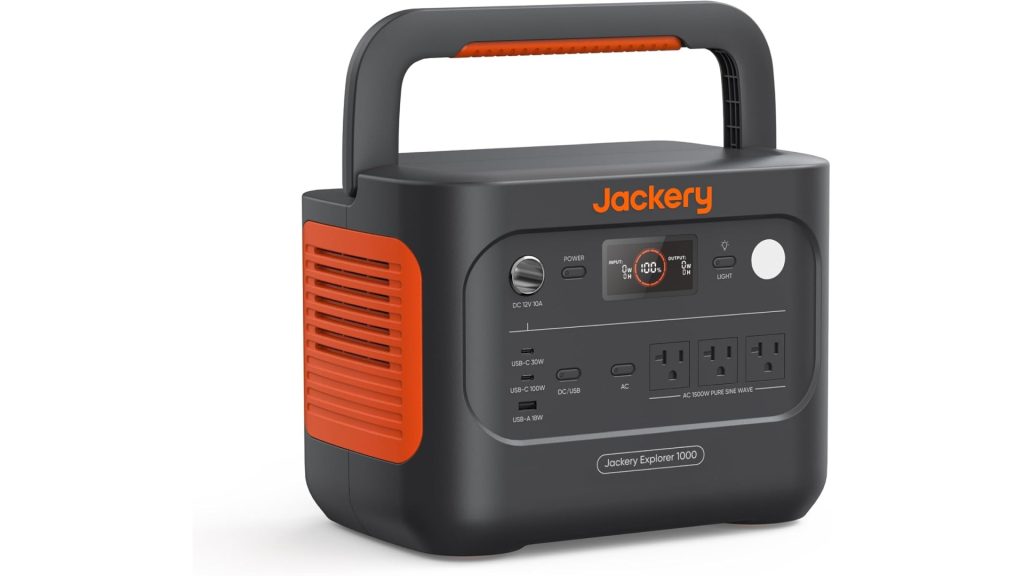
The Jackery Explorer 1000 v2 is a light, portable power station for trips or outages. It weighs under 24 pounds but packs a punch with a 1,500W AC output and a 1,070Wh capacity. You can plug in a camping fridge or a smartphone using its many ports.
The LFP battery lasts a long time, staying strong for over 10 years. A handy app lets you pick quiet modes or save energy. It charges fast, hitting a full battery in just one hour via the app. This makes it a great, reliable tool for any outdoor adventure. Shop now on Amazon (paid link).
Generator Efficiency and Safety at the Campsite
A good generator needs proper care to last your whole trip. Focus on setup and habits. These steps boost performance and cut risks.
Fuel Management and Storage
Store gas in approved cans away from heat. Use stabilizers to keep it fresh for up to a year. For propane, secure tanks upright during drives.
Run the unit dry before storage to avoid clogs. New models need a break-in: run at half-load for 20 hours. This prevents early wear. Check fuel lines for leaks before each use. Clean spills right away to stay safe.
Safe Placement and Carbon Monoxide Prevention
Keep fuel generators at least 20 feet from tents, RVs, or doors. Wind can carry fumes, so turn the exhaust away from where your campsite is located. Never run the generator inside anything, because CO builds fast and kills without smell.
The Consumer Product Safety Commission reports hundreds of CO deaths yearly from misuse. Use CO detectors in sleeping areas. Of course, portable battery stations skip this worry entirely.
Elevate generator units on dry ground to avoid water damage. Shut off when not in use.
Extending Runtime with Parallel Kits and Extended Fuel Tanks
Parallel kits link two inverter generators for double the power without bulk. Honda, Yamaha, and other brands offer cables to sync units. This way, two 2,000-watt models act like a 4,000 watt generator, but lighter to carry.
Add external tanks for gas-powered models to stretch running hours, but do your research carefully to get the right fuel extension kit. Some hold 5 gallons for 20+ hours. Check compatibility first, and fully test these setups at home before going out on the road.
Conclusion
For the most part, pick an inverter generator over a conventional open frame generator for clean, quiet power. Match wattage to your camping gear: add up the running watts plus starting surge power requirement. Choose the fuel source by site: propane for storage, batteries for silence.
The best portable power generators for camping fit your style, whether minimalist hikes or group adventures. Assess your power loads, weight limits, and noise rules. Grab one that matches, and power up your next adventure worry-free.
Photo by Alex Beholder on Unsplash.